Skip to content
  • Products
  • Portfolio
  • Process
  • Insights
  • Contact

Part of AIM Group

  • AIMSKINCARECosmetics & skincare manufacturingYou are here
  • AIMFOODFood & beverage manufacturing
  • INDO PANGAN UTAMACookies & bars manufacturing
EnglishEN/Bahasa IndonesiaID

About

Who we are

A cosmetic contract manufacturer in Bekasi since 2017, part of AIM Group.

  • 01Our StoryHow we have grown since 2017 as part of AIM Group.
  • 02Facilities & CertificationOur MM2100 plant, run to CPKB standards and Halal MUI certified.
  • 03MemoriesExhibitions, seminars, and team moments from year to year.

Have a brief in mind?

Services

What we do

From formula to registration, choose the full service or only the stages you need.

  • 01Full Service Manufacturing (ODM)Formula, packaging, and documents developed for your brand.
  • 02Private Label (OEM)Start from our base formulas and produce under your name.
  • 03Formulation & R&DNew formulas or improvements, with samples before production.
  • 04Packaging & DesignContainers, materials, and labels that suit the formula.
  • 05RegulationsDocuments and guidance for BPOM notification and Halal certification.

Have a brief in mind?

  • About
    • Our StoryHow we have grown since 2017 as part of AIM Group.
    • Facilities & CertificationOur MM2100 plant, run to CPKB standards and Halal MUI certified.
    • MemoriesExhibitions, seminars, and team moments from year to year.
  • Services
    • Full Service Manufacturing (ODM)Formula, packaging, and documents developed for your brand.
    • Private Label (OEM)Start from our base formulas and produce under your name.
    • Formulation & R&DNew formulas or improvements, with samples before production.
    • Packaging & DesignContainers, materials, and labels that suit the formula.
    • RegulationsDocuments and guidance for BPOM notification and Halal certification.
  • Products
  • Portfolio
  • Process
  • Insights
  • Contact

Part of AIM Group

  • AIMFOODFood & beverage manufacturing
  • INDO PANGAN UTAMACookies & bars manufacturing

PT Aimskincare Manufacturing Indonesia is a skincare and cosmetic contract manufacturer serving OEM and ODM brands since 2017. Certified CPKB, Halal Grade A, BPOM, ISO 9001, ISO 22716, and FDA.

Company

  • Our Story
  • Facilities & Certification
  • Memories
  • Process
  • Careers

Services

  • Full Service (ODM)
  • Private Label (OEM)
  • Formulation & R&D
  • Packaging & Design
  • Regulations

Contact

Jl. Selayar Blk B2-7, Mekarwangi, Kec. Cikarang Barat
Block B2-7
Kawasan Industri MM2100
Bekasi 17530
Email
info@aimskincare.co
Phone
(021) 29388999
Hours
08.00 - 17.00 WIB

News from our lab

Regulation updates, formulation notes, and company news.

  • Instagram
  • LinkedIn
  • TikTok
  • YouTube

© 2026 PT Aimskincare Manufacturing Indonesia. Part of the AIM Group.

Designed & developed by Afitiya Rohim

Privacy policy
A

AIMSKINCARE

?
Home/Products/Skincare/Vitamin C serum

Skincare

Vitamin C serum contract manufacturing

A vitamin C serum that stays clear in the bottle: form of vitamin C, pH, antioxidant partners, and light-proof packaging worked out in our lab, then produced in a CPKB and Halal certified plant in MM2100, Bekasi, with BPOM handled.

PackagingDropper bottle

Precise drops for serums and oils.

Your choice: Dropper bottle

  • CPKB
  • HALAL Grade A
  • BPOM
  • ISO 9001
  • ISO 22716
  • FDA
OverviewWhy usProcessFAQ

Overview

What is vitamin C serum contract manufacturing?

Vitamin C serum contract manufacturing is a cosmetics plant making a vitamin C serum for your brand, from the choice of vitamin C form to the filled, labelled, BPOM notified bottle. The plant formulates, runs stability and claim tests, sources the packaging, and produces each batch; the product carries your name and sells at your price.

Vitamin C is the one skincare active that visibly fails in the bottle. L-ascorbic acid oxidizes with air, light, heat, and water, turning from clear to yellow to brown and losing its effect on the way, so a vitamin C serum is as much a stability project as a formulation one. The first decision is the form: pure L-ascorbic acid at a low pH for the strongest profile, or a stable derivative such as 3-O-ethyl ascorbic acid, sodium ascorbyl phosphate, or ascorbyl glucoside for a milder, longer-lived serum. Around that, a brand picks a watery or lightly viscous texture, partners such as vitamin E, ferulic acid, or hyaluronic acid, and an amber dropper or airless pump.

With ODM we build the serum around your brief and test the stability of that exact formula. With OEM, or private label, you adopt a vitamin C base we already produce and change the texture, scent, or packaging. Bring the strength and form you have in mind, the skin type, and a rough quantity, and we begin with samples in our MM2100 lab in Bekasi.

About AIMSKINCARE

About us

PT Aimskincare Manufacturing Indonesia is a skincare and cosmetic contract manufacturer serving OEM and ODM brands since 2017. Certified CPKB, Halal Grade A, BPOM, ISO 9001, ISO 22716, and FDA.

Founded
2017
Location
Kawasan Industri MM2100, Bekasi
Group
AIM Group

Why make your vitamin C serum with AIMSKINCARE.

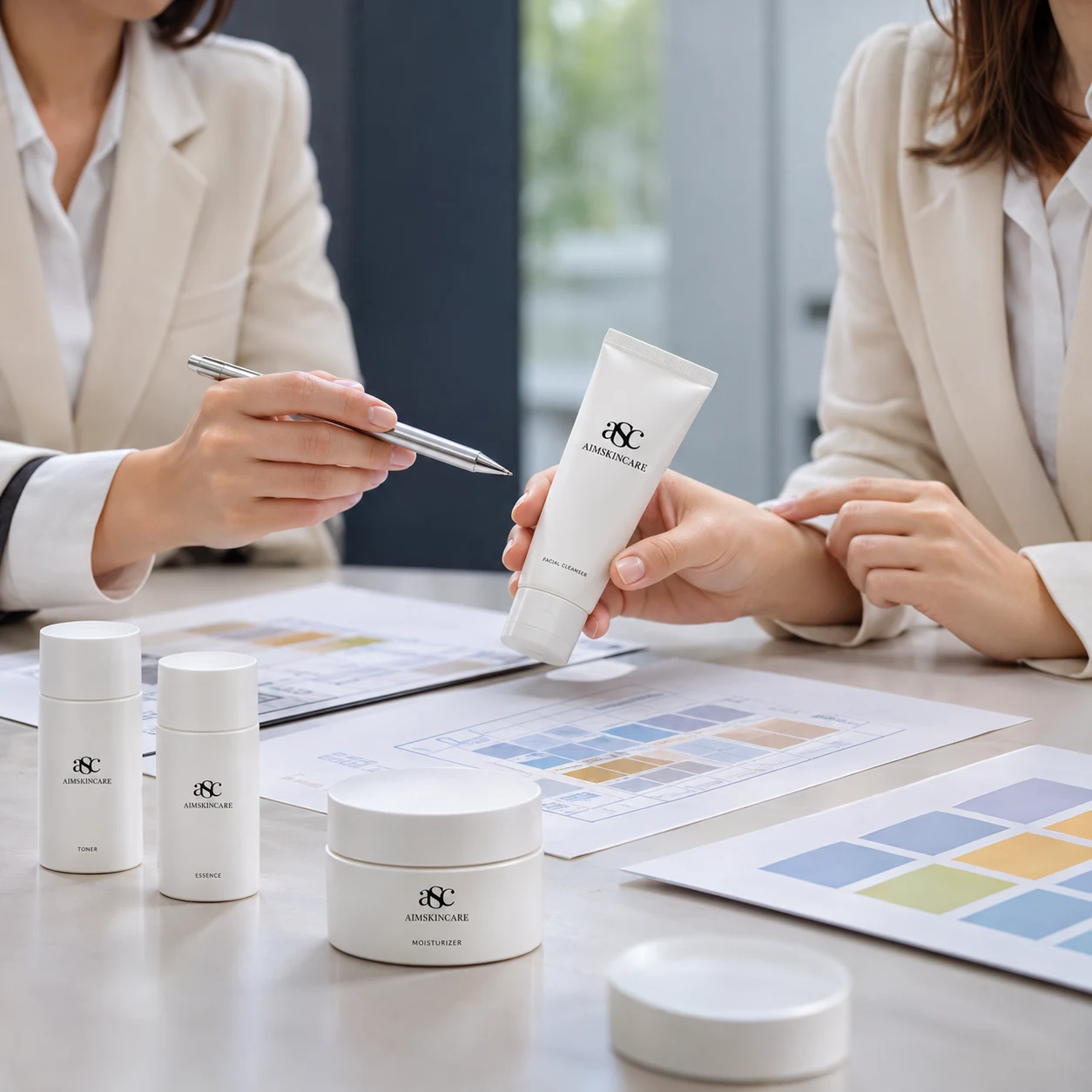
Two people reviewing a skincare tube against packaging colour swatches

Experience

Eexperience
9th99th
Products
8 mill+88 mill+
Brands
80+8080+

Certification

  • CPKB
  • HALAL Grade A
  • BPOM
  • ISO 9001
  • ISO 22716
  • FDA
  1. 01

    In-house formulation

    Texture, scent, and claims tuned to your brief by our own R&D team.

  2. 02

    CPKB & Halal facility

    Made in MM2100, Bekasi, with quality checks on every batch.

  3. 03

    BPOM & Halal handled

    We prepare notification and halal documents.

  4. 04

    Practised in gentle formulas

    Our mom and baby work carries into products for sensitive skin.

Six steps from brief to shelf.

Full process

Vitamin C serum manufacturing questions

What is vitamin C serum contract manufacturing?

A cosmetics plant formulates, stability tests, fills, and notifies at BPOM a vitamin C serum that is sold under your brand. The plant chooses the form of vitamin C, the pH, and the packaging that keeps it from oxidizing; you decide the positioning, the price, and the channel.

Why does vitamin C serum turn yellow or brown, and how is that prevented?

L-ascorbic acid oxidizes to dehydroascorbic acid when it meets oxygen, light, heat, or metal ions, and the color shift is the visible sign. Prevention is a package of measures: a low pH, chelating agents, antioxidant partners such as vitamin E and ferulic acid, little or no water, nitrogen flushing during filling, and an opaque or amber airless container.

L-ascorbic acid or a derivative: which should a brand choose?

L-ascorbic acid is the reference form, with the strongest antioxidant and brightening profile, but it needs a pH around 3.5 or below, stings on some skin, and has the shortest shelf life. Derivatives like 3-O-ethyl ascorbic acid, sodium ascorbyl phosphate, ascorbyl glucoside, or tetrahexyldecyl ascorbate convert in the skin, tolerate a neutral pH, and stay clear far longer. Sensitive-skin and mass-market briefs usually go to a derivative.

What pH does a vitamin C serum need?

It depends on the form. Pure L-ascorbic acid works and penetrates best in an acidic serum, roughly pH 3 to 3.5, which is also why it can tingle. Derivatives such as sodium ascorbyl phosphate prefer a near-neutral range and would degrade at a low pH. The pH is therefore fixed by the active first, and the thickener and preservative are chosen to survive it.

What is the difference between a vitamin C serum and a brightening serum?

A vitamin C serum is defined by one active and sells on its antioxidant and glow story. A brightening serum is defined by its goal and may use niacinamide, alpha arbutin, tranexamic acid, or licorice, with or without a vitamin C derivative. Brands often sell both: vitamin C for the morning routine, brightening for dark spots at night.

Which ingredients pair well with vitamin C?

Vitamin E (tocopherol) and ferulic acid stabilize L-ascorbic acid and extend its antioxidant effect. Hyaluronic acid and glycerin offset the drying feel of a low pH. Niacinamide is a common partner in derivative-based serums. Strong exfoliating acids or retinol in the same bottle are usually avoided, both for stability and for skin tolerance.

Can vitamin C be combined with niacinamide in one serum?

Yes. The old warning about the two cancelling each other came from unstable formulas at high heat. In a serum with a vitamin C derivative at a moderate pH the pair is stable and widely used. With pure L-ascorbic acid at pH 3 the combination is harder to formulate, so a brand that wants both usually chooses a derivative.

Which claims can a vitamin C serum make, and what tests back them?

"Helps brighten the look of skin" and "helps even out skin tone" are supported by instrumental skin tone measurements on volunteers over several weeks. "Antioxidant" is supported by in vitro data on the formula. "Helps reduce the look of dark spots" needs a clinical study. Skin compatibility is shown by a patch test. Claims that promise to whiten or treat pigmentation disorders are not accepted.

Which packaging protects a vitamin C serum?

An amber or opaque glass dropper bottle is the market standard and blocks light. An airless pump keeps air out as well, which matters most for L-ascorbic acid. Clear glass is avoided unless the serum uses a very stable derivative. Smaller fills, 15 to 30 ml, are common because the serum is meant to be used up within a few months.

Can a water-free vitamin C serum be made?

Yes. Anhydrous serums suspend L-ascorbic acid or tetrahexyldecyl ascorbate in silicones or oils, which removes the water that drives oxidation and allows a higher strength with less stinging. The texture is silkier and heavier than a water serum, so it suits dry or normal skin better than oily skin.

Is a vitamin C serum suitable for sensitive skin?

A derivative-based serum at a comfortable pH, without fragrance or denatured alcohol, usually is. Pure L-ascorbic acid at a low pH can sting and is a harder sell to that user. Either way, the finished formula goes through a patch test before "suitable for sensitive skin" goes on the label.

Which labelling rules matter for a vitamin C serum?

Under BPOM Regulation No. 18 of 2024 the label carries the full ingredient list in INCI names, the batch number, the expiry or period after opening, and directions for use. A vitamin C serum usually adds a storage note (keep away from light and heat) and a line that a slight color change can occur. Claims follow No. 3 of 2022.

What is the difference between OEM and ODM for a vitamin C serum?

ODM develops a formula from your brief, including the choice of vitamin C form, strength, texture, and partners, with a stability study on that exact formula. OEM, or private label, starts from a vitamin C base we already produce and changes the texture, scent, or bottle, so the route to a first batch is shorter.

What should a brand prepare before the first vitamin C serum consultation?

The form and strength of vitamin C you want to sell, the skin type and age of your user, whether the serum is for morning or evening use, the texture and color you prefer, your packaging idea, the claims you hope to print, and a rough quantity. From those we propose two or three directions and make samples.


Ready to make a vitamin C serum under your brand?

Send your packaging choice, or pick not sure yet. Our team will contact you about sample development. The first consultation is free.

Your choice: Dropper bottle

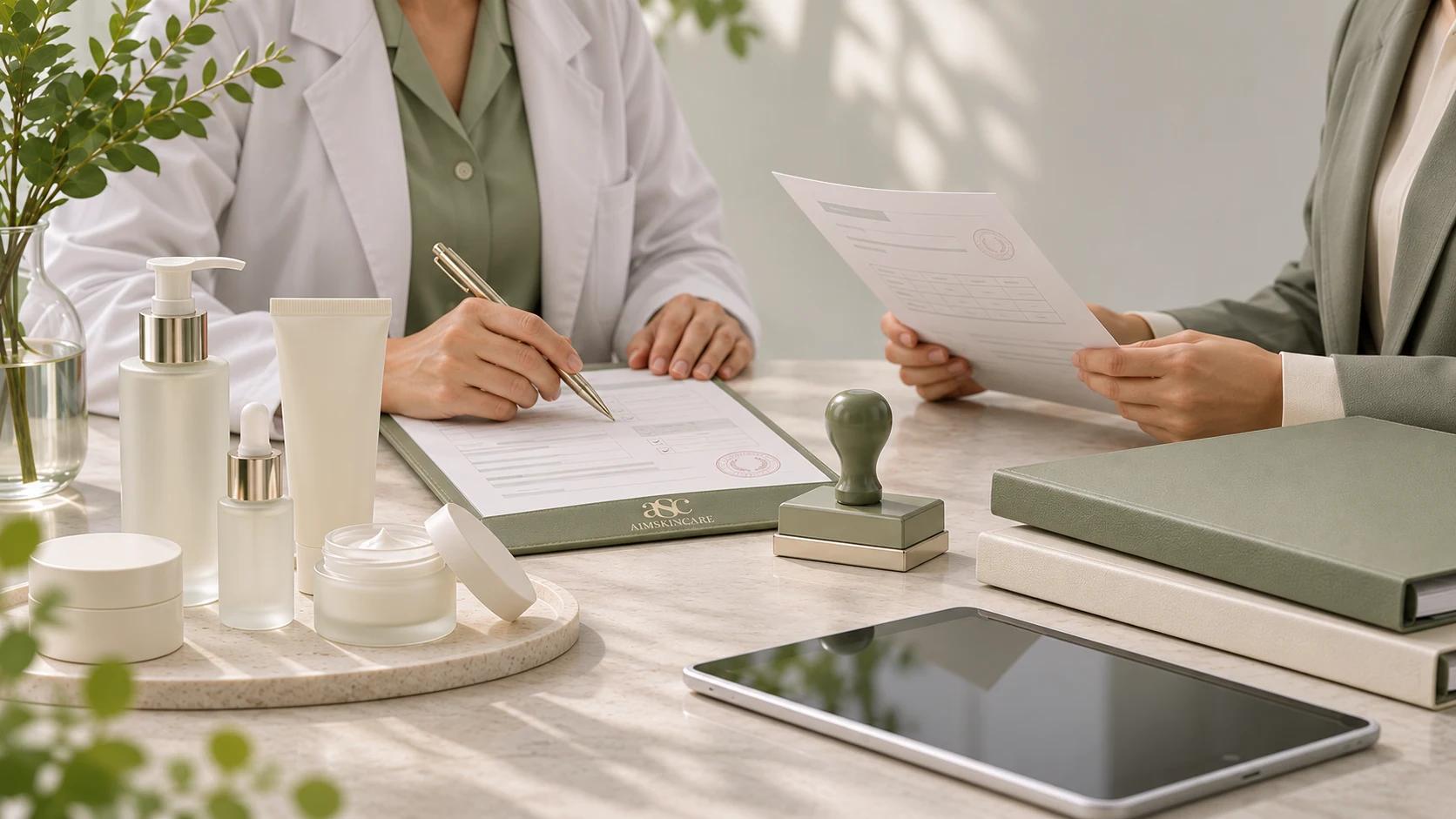
Two people going through registration documents beside skincare samples and a stamp

You might also make

All products
View details
Facial wash

Skincare, Body Care

View details
Toner

Skincare

View details
Hydrating serum

Skincare

View details
Moisturizer

Skincare

View details
Sunscreen

Skincare, Body Care

View details
Eye serum

Skincare

Vitamin C serumDropper bottle