What is spot treatment contract manufacturing?
A cosmetics plant develops and produces a targeted blemish product for your brand, a drying lotion, clear gel, tinted cream, roll-on, or patch, concentrated for use on single spots, with stability and tolerance tests, small-format filling, and the BPOM notification. You sell it under your own name.
What is the difference between a spot treatment and an acne treatment?
A spot treatment is dotted on individual blemishes, so it can be more concentrated or more drying and comes in a 10 to 15 ml pack. An acne treatment is spread over the whole face or zone once or twice a day at a level all the skin tolerates. The spot is the emergency product; the treatment is the routine.
What is the difference between a spot treatment and an anti-acne serum?
An anti-acne serum is a thin, all-over leave-on in a dropper, layered under moisturizer every day. A spot treatment is thicker or faster-drying, applied only where a blemish is, and often tinted or formulated to dry down invisibly. Brands usually position the serum as prevention and the spot as the quick response.
Which spot treatment formats can be made?
A two-layer drying lotion with a pink sediment dipped with a cotton swab; a clear, fast-drying gel; a tinted spot cream that conceals while it works; a roll-on with a metal or plastic ball for a cooling feel; and a hydrocolloid patch, whose registration route is confirmed at the consultation. Each has its own packaging and filling.
Which actives go into a spot treatment, and what does each do?
Salicylic acid up to 2 percent in a leave-on to loosen the plug. Zinc oxide and calamine to dry and calm the spot and give the pink color. Kaolin or bentonite to absorb oil. Tea tree oil for a purifying story. Niacinamide and centella to reduce the look of redness. Actives classed as medicines are outside the cosmetic route and are not used.
How does a drying lotion work, and why is it not shaken?
The bottle holds a clear liquid over a layer of pink powder, zinc oxide, calamine, and kaolin. The user dips a cotton swab through the liquid into the sediment and dabs the paste onto the spot, where it dries into a thin layer that absorbs oil overnight. Shaking would mix the two and ruin the dose; the directions say so.
Is a hydrocolloid acne patch a cosmetic?
Not automatically. A patch that only covers and absorbs fluid, and one that carries a cosmetic active such as salicylic acid, can fall under different rules, and the classification depends on the construction and the claims. We settle the route, and whether it fits a cosmetic notification, at the consultation rather than assume it.
Can a spot treatment be tinted or worn under makeup?
Yes. A tinted spot cream with iron oxides from the permitted colorant list conceals the blemish while the actives work, and is worn under or instead of concealer. The gel version dries clear and matte so foundation goes over it. The tint is matched to a few common skin tones at the consultation.
Which claims can a spot treatment carry?
Cosmetic ones under BPOM Regulation No. 3 of 2022: helps dry out and reduce the look of a blemish, helps reduce the appearance of redness, helps absorb excess oil, conceals. "Heals overnight", "kills bacteria", and "cures acne" are therapeutic and not allowed. A visible-result claim needs a clinical or instrumental evaluation behind it.
How much salicylic acid can a spot treatment contain?
A spot treatment is leave-on, so the Indonesian technical requirements under BPOM Regulation No. 23 of 2019 as amended cap salicylic acid at 2 percent, the same as for a face serum; the small area of use does not raise the limit. Within it, a spot product is usually set near the top, with the pH and the drying agents doing the rest of the work.
Can a spot treatment be made for sensitive skin?
Yes, with a gentler recipe: a lower salicylic acid level or PHA, zinc oxide and calamine for drying, centella or allantoin to calm, no fragrance, no ethanol or menthol. A patch test backs "for sensitive skin". A roll-on with a cooling ball often suits this user better than a strong drying lotion.
Which packaging suits a spot treatment?
A small tube of 10 to 15 ml with a narrow nozzle is the usual choice for gels and tinted creams. A roll-on bottle suits a liquid gel. A dropper or a small glass bottle suits a drying lotion, which must not be shaken. An airless mini protects a formula with fragile actives.
What is the difference between OEM and ODM for a spot treatment?
ODM: our R&D team develops the formula and pack from your brief, deciding format, actives, tint, and applicator. OEM, or private label: you start from a spot gel or drying lotion we already produce and change the tint, the scent, or the applicator, with stability and tolerance data already available.
What should a brand prepare before a spot treatment consultation?
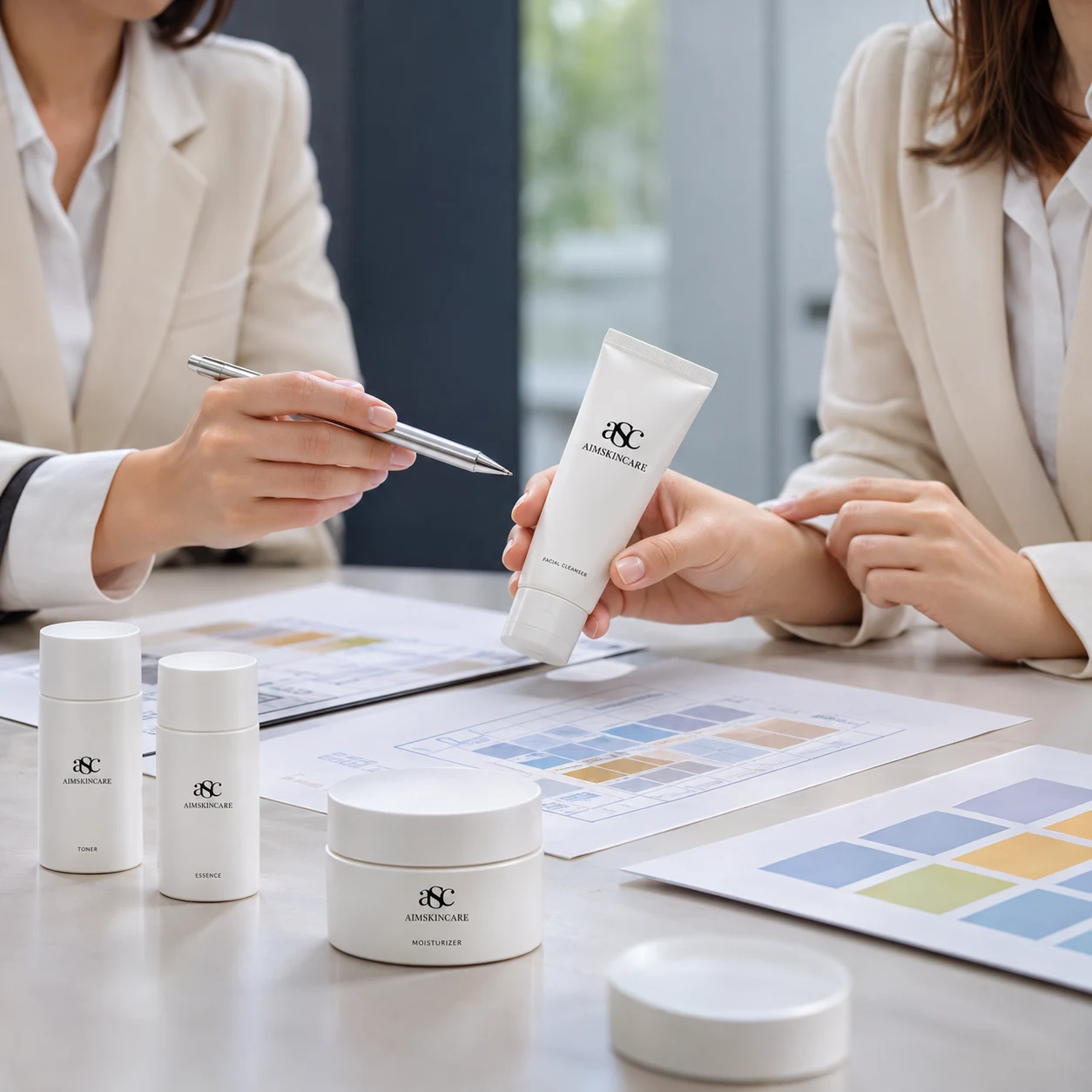
The format you have in mind (drying lotion, gel, tinted cream, roll-on, patch), the claims you want to print, your preferred actives or ones to avoid, whether it should be tinted, a reference product, the selling price range, a rough quantity. We check claims and the route first, then propose a formula and make samples.