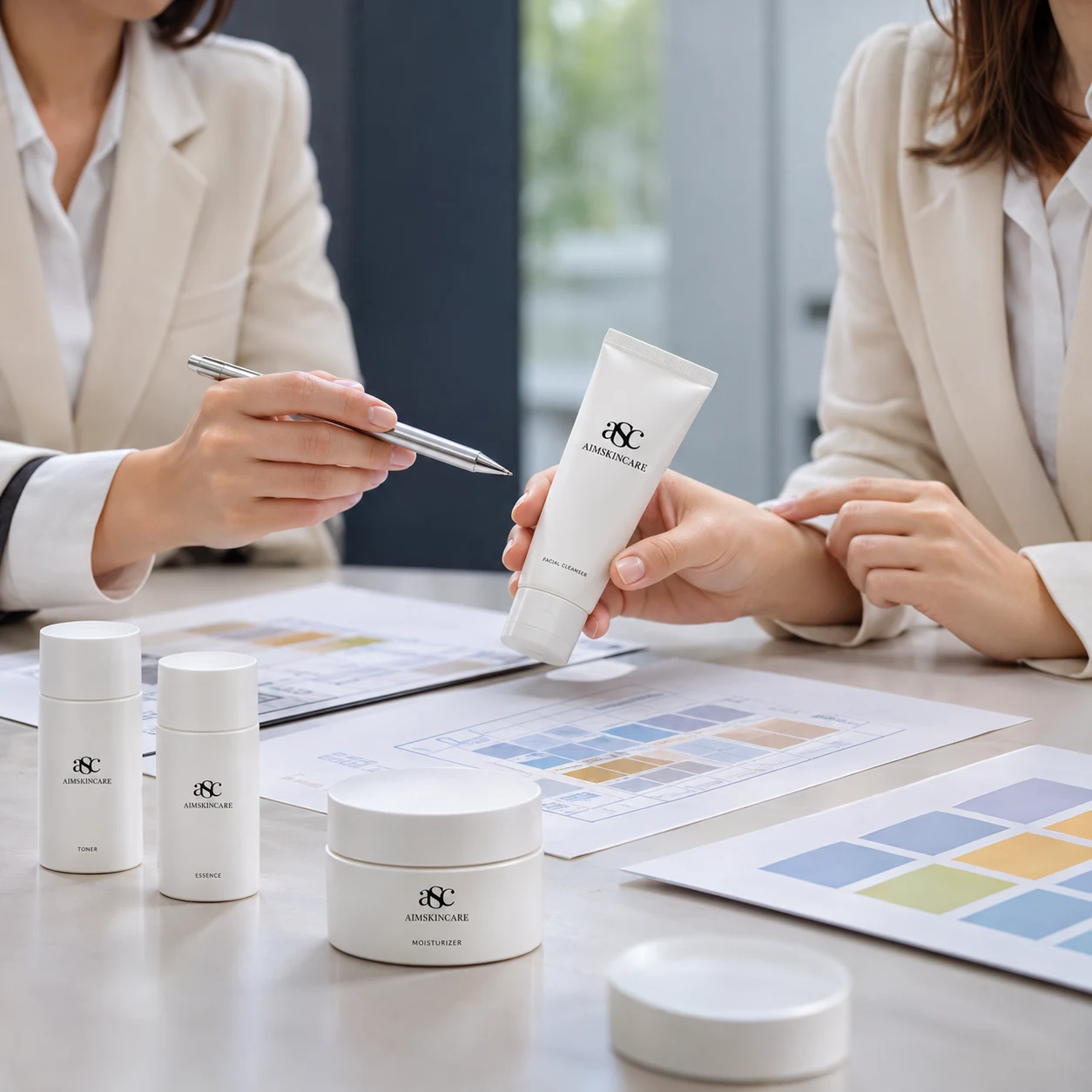
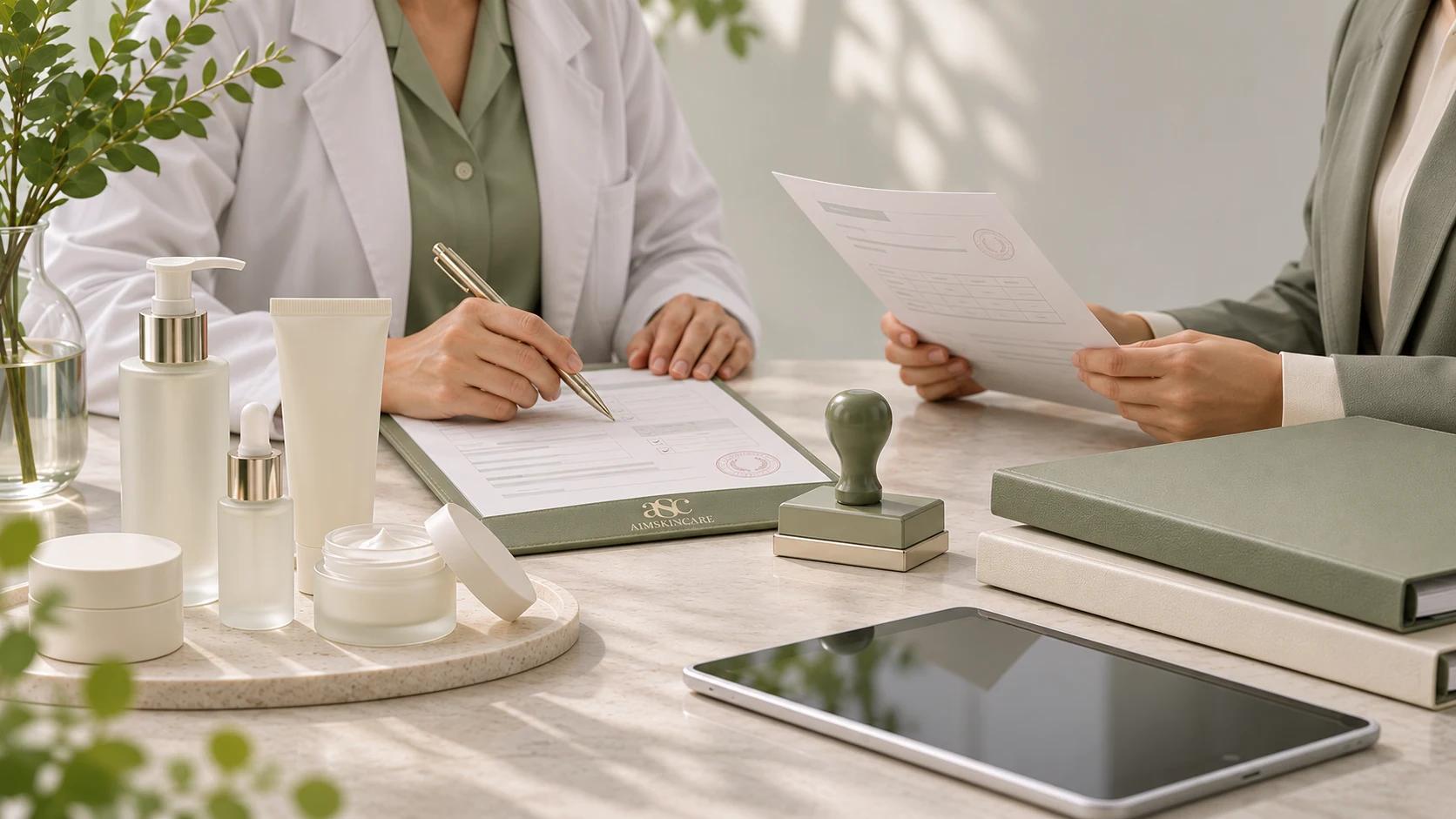
What is day cream contract manufacturing?
A cosmetics plant develops, tests, produces, and notifies at BPOM a morning face cream that your brand sells under its own name. If the cream carries SPF, the plant also arranges the in vivo test that proves the number. The brand decides the positioning, the finish, and the price.
What is the difference between a day cream and a moisturizer?
A moisturizer is any cream that hydrates and can be used at any hour. A day cream is a moisturizer tuned for the morning: lighter, faster to absorb, built to sit under makeup, often with antioxidants and sometimes SPF. A brand that sells one all-purpose cream calls it a moisturizer; a brand that splits the routine sells a day cream and a night cream.
What is the difference between a day cream and a night cream?
The day cream is light, absorbs quickly, holds makeup, and may carry SPF and antioxidants; it avoids retinol and strong acids because of sunlight. The night cream is richer, carries more emollients and the actives that work best overnight, and is allowed to take a minute to settle. Selling them as a pair is the classic skincare range.
Should a day cream carry SPF?
It depends on how your customer uses it. A day cream with SPF 30 is convenient for users who skip a separate sunscreen, but it needs an in vivo SPF test, permitted UV filters, and a heavier texture, and most people apply too little cream to reach the labelled protection. A day cream without SPF stays lighter and is sold next to a proper sunscreen.
What does an SPF claim on a day cream require?
The same as a sunscreen. The SPF value must be supported by in vivo testing on the finished formula, commonly by ISO 24444; a PA grade needs a UVA test such as ISO 24443; and the UV filters and their levels must follow the BPOM permitted list (Regulation No. 23 of 2019 as amended by No. 17 of 2022). The label then carries sunscreen directions and warnings.
Which actives suit a day cream?
Niacinamide for tone and oil control, antioxidants such as vitamin E, green tea, or a stable vitamin C derivative to work alongside sunscreen, hyaluronic acid and glycerin for hydration, and ceramides for the barrier. Retinol and exfoliating acids are kept for the night cream, because they make skin more sun-sensitive and degrade in daylight.
How is pilling under makeup avoided?
Pilling happens when film formers in the cream and in the foundation rub against each other before the cream has set. We keep the level of thickening polymers low, balance silicones against esters, and tune the cream to absorb within about a minute. During sampling we test it under common foundation and cushion types, not just on bare skin.
Matte or dewy: which finish suits a tropical climate?
Oily and combination skin in Indonesian humidity usually asks for a soft matte or natural finish, achieved with light esters, a little silica or starch, and no heavy oils. Dry skin and the "glass skin" trend ask for dewy, which comes from humectants and a touch of emollient. Both are possible in a day cream; the user decides.
What is the difference between a tinted day cream and a BB cream?
A tinted day cream is skincare with a sheer tint that evens the look of the skin and needs no shade range beyond two or three. A BB cream is makeup with skincare benefits: more pigment, more coverage, a wider shade range, and usually SPF. If the tint is the main selling point, the product belongs on the makeup side of your range.
Which claims can a day cream make, and what tests back them?
"Hydrates for 24 hours" uses corneometer readings on volunteers. "Helps control oil" or "matte all day" uses a sebumeter and shine measurement over the day. "Non-comedogenic" and "for sensitive skin" need clinical and patch test data. Antioxidant claims rest on in vitro data for the formula. An SPF or PA value needs its own in vivo test.
Can a day cream be made for sensitive skin?
Yes. The formula leaves out fragrance and denatured alcohol, uses a mild emulsifier and preservative system, and leans on ceramides, panthenol, and Centella. If the cream carries SPF, mineral or hybrid filters are usually preferred for that user. The finished cream goes through a patch test before the claim is printed.
Which packaging suits a day cream?
A jar is the market expectation and the most economical for a plain day cream. A tube is more hygienic and suits a day cream with SPF, where repeated opening and finger contact are better avoided. An airless pump protects antioxidants and gives suits a higher-priced line. A pump bottle fits a lotion-cream texture.
What is the difference between OEM and ODM for a day cream?
ODM develops the day cream from your brief: the finish, the actives, SPF or no SPF, and the tests that follow. OEM, or private label, starts from a day cream base we already produce and adjusts the scent, tint, or packaging, which is the faster route to a first product.
What should a brand prepare before the first day cream consultation?
Whether you want SPF and at what level, the finish (matte, natural, dewy), the skin type and age of your user, whether the cream must work under makeup, the claims you hope to print, your packaging idea, a selling price range, and a rough quantity. If you also plan a night cream, say so; the pair is designed together.