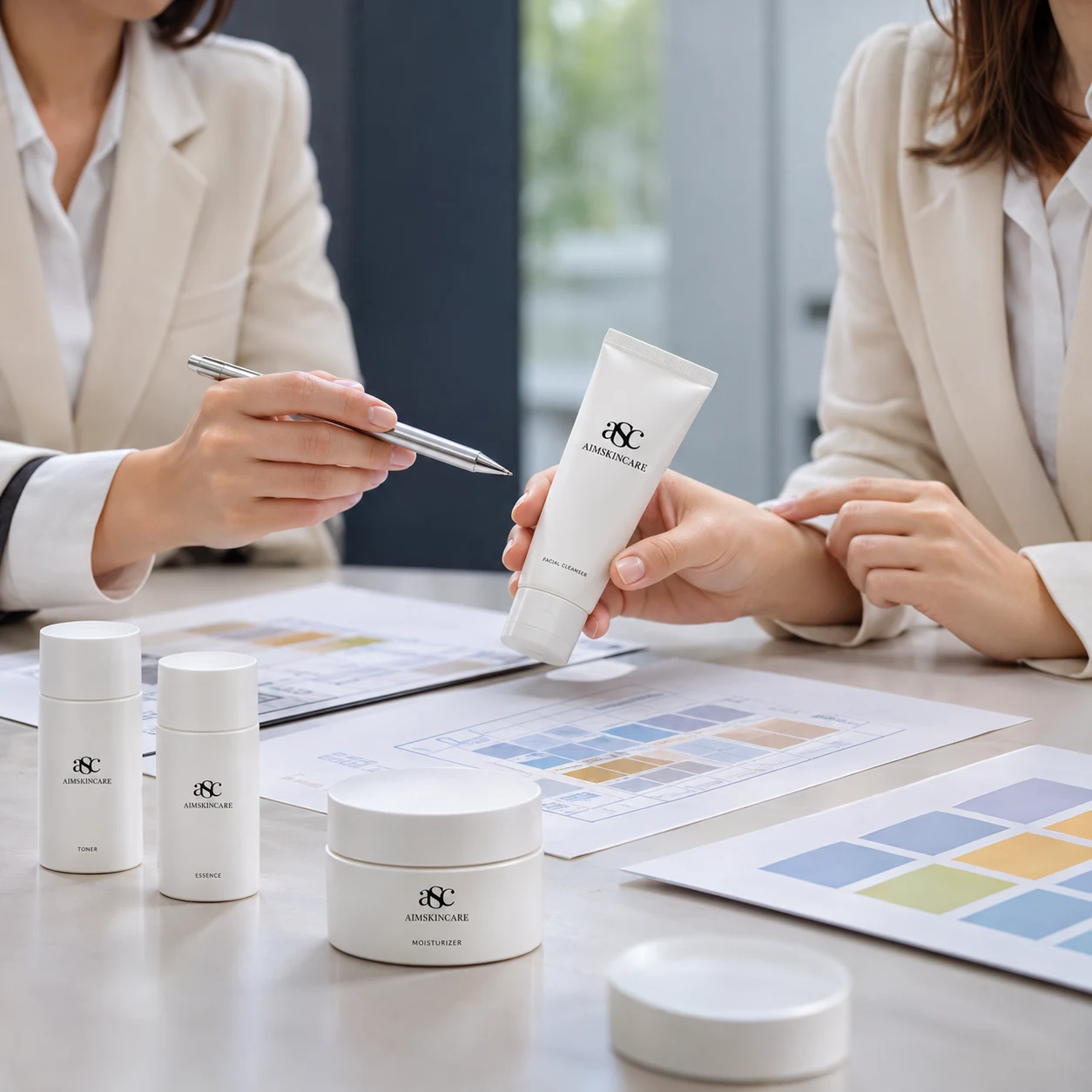
What is eye cream contract manufacturing?
A cosmetics plant develops, tests, produces, and notifies at BPOM a cream for the eye area that your brand sells under its own name. The plant carries the eye-area safety work and the claim studies; the brand carries the name, the positioning, and the price. It is usually the second eye product in a range, after or beside an eye serum.
What is the difference between an eye cream and an eye serum?
An eye cream is an emulsion: richer, with emollients and barrier lipids, suited to dry and mature skin and to night use. An eye serum is a light gel or fluid that carries actives with little else, suited to oily skin, younger users, and the morning. The cream is about comfort and lines; the serum is about puffiness and brightness.
Can a face moisturizer be used as an eye cream instead?
Many people do, which is exactly the objection an eye cream brand has to answer. A face cream may carry fragrance, denatured alcohol, acids, or oils that migrate and sting, and it has not been tested near the eye. An eye cream is formulated and tested for that area, which is the honest reason for the separate product.
Which actives are used in an eye cream?
Ceramides, cholesterol, and squalane for dryness and comfort; peptides for the look of fine lines; caffeine for the look of puffiness; niacinamide and licorice root extract for the look of dark circles; hyaluronic acid for plumping; and a fine light-reflecting mica for an instant brightening effect. Retinol appears only in low, encapsulated form.
Why must an eye cream not migrate, and how is that controlled?
Light oils and volatile silicones spread across the skin over hours, and around the eye that means they reach the lash line and the eye itself, causing stinging and blurred vision. We build the emulsion from heavier, structured emollients such as shea butter and cetyl esters, keep the oil phase modest, and check spread on volunteers during sampling.
Why is an eye cream fragrance-free, and what about its preservative?
Fragrance is the leading cause of stinging and watering near the eye, so an eye cream leaves it out. The preservative system is chosen for low irritation and must still pass a challenge test, because the cream is used daily from a small jar or tube and must meet the stricter microbiological limits that apply to eye-area cosmetics.
Which tests does an eye cream need, and what is "ophthalmologically tested"?
Stability, a preservative challenge test, and microbiological testing to eye-area limits, plus a patch test for skin compatibility. "Ophthalmologically tested" means the finished cream was used around the eyes by volunteers under an eye specialist, who recorded any stinging, redness, or tearing. Claims about lines, puffiness, or dark circles need their own studies.
Which regulation specifically applies to eye creams in Indonesia?
Eye-area cosmetics are held to stricter microbiological requirements than other leave-on products under the BPOM technical requirements (Regulation No. 23 of 2019 as amended by No. 17 of 2022), and the safety assessment must address use near the eye. Claims follow Regulation No. 3 of 2022, so "helps reduce the look of dark circles" is accepted and "removes dark circles" is not.
Can an eye cream contain retinol?
Yes, at a low level and preferably encapsulated, which is why "retinol eye cream" exists as a category. The skin there is thin and reacts quickly, so the cream is cushioned with ceramides and squalane, directed for night use a few times a week, and kept in an airless or opaque container. A patch test and clear directions are essential.
Who is an eye cream for?
Dry and mature skin first: users from their thirties onward who see fine lines at the outer corner and dryness under the eye. Younger users with dark circles or puffiness often prefer the lighter eye serum, which is why many brands sell both and position the cream as the night step.
Can an eye cream be used in the morning under concealer?
A lighter version can, and brands often make a day eye cream for exactly that. It uses a smaller oil phase, absorbs in about a minute, and may carry a soft light-reflecting tint that helps concealer sit evenly. The rich ceramide or retinol eye cream is better kept for the night.
Which packaging suits an eye cream?
A small jar of 15 to 20 g is the market standard and the most economical. A tube with a slim or metal applicator tip is more hygienic and gives a cooling touch. An airless pot or pump protects retinol and peptides and avoids finger contact. For a product used so near the eye, hygiene is a fair reason to move away from the open jar.
What is the difference between OEM and ODM for an eye cream?
ODM means we develop the emulsion and active system from your brief and run the eye-area studies on that exact formula. OEM, or private label, means you start from an eye cream base we already produce and change the texture, tint, or container, which is faster because the safety work on the base is already done.
What should a brand prepare before the first eye cream consultation?
The concern you lead with (dryness and lines, puffiness, or dark circles), the age and skin type of your user, day or night use, the richness you want, whether you want retinol, the claims you hope to print, your packaging idea, a selling price range, and a rough quantity. If you already sell an eye serum, bring it.