What is exfoliator contract manufacturing?
A cosmetics plant formulates and produces a leave-on chemical exfoliant for your brand, an AHA, BHA, or PHA liquid, pad, serum, or peeling gel, setting the acid concentration and pH, running stability and tolerance tests, filling it, and preparing the BPOM notification. You decide the strength positioning and sell it under your name.
AHA, BHA, PHA: what is the difference, and who is each for?
AHA (glycolic, lactic, mandelic) are water-soluble and work on the surface: dullness, uneven tone, rough texture. BHA, salicylic acid, is oil-soluble and reaches into the pore: blackheads, oily and acne-prone skin. PHA (gluconolactone, lactobionic acid) are larger molecules that penetrate slowly and suit sensitive or first-time users. Many exfoliators blend two.
What acid concentration and pH does Indonesia allow in an exfoliator?
Under BPOM Regulation No. 23 of 2019 as amended by No. 17 of 2022, AHA such as glycolic or lactic acid may be used up to 10 percent at a pH not below 3.5 in consumer products, and salicylic acid up to 2 percent in leave-on products. Within those limits we set the pair for the skin you are targeting; a higher number is not automatically a better product.
Why does pH matter as much as the percentage?
Because only the free acid form exfoliates. Near the acid's pKa about half of it is active; raise the pH and more is neutralized into a salt that hydrates but barely exfoliates, lower it and the product stings and the skin barrier suffers. Two products with the same percentage can therefore behave very differently, and the pH is checked on every batch.
What is the difference between an exfoliator and a face scrub?
An exfoliator dissolves the bonds between dead cells chemically and is left on the skin. A face scrub removes them mechanically with particles and is rinsed off. Acids reach into pores and even the whole surface; scrubs give an immediate smooth feel. Sensitive skin usually does better with a low-strength PHA exfoliator than with grit.
Is an exfoliating toner the same as an exfoliator?
An exfoliating toner is one format of exfoliator: a watery liquid with acid, applied on a cotton pad after cleansing. The word toner describes the texture, not the function. A hydrating toner contains no acid and can be used every day; an exfoliating toner is a treatment and is used as its directions say.
Which exfoliator formats can be made?
A watery exfoliating toner; pre-soaked pads in a jar; a slightly viscous serum with a dropper; a peeling gel that is massaged until it forms soft clumps; and a weekly mask with a higher acid load for a short contact time. The same acid pair can be delivered in any of them; the base and the packaging change.
How does a peeling gel "roll up dead skin"?
Most of what rolls off is the gel itself: a carbomer base with a cationic ingredient that precipitates into soft fibers under friction, carrying loosened surface cells with it. A mild acid or enzyme in the formula does the real exfoliating. We say this plainly so the brand does not print a claim the mechanism cannot support.
Can an exfoliator be made for sensitive skin?
Yes. PHA such as gluconolactone or lactobionic acid at a modest level, or mandelic acid, at a pH toward the upper end of the allowed range, with panthenol, allantoin, or centella to calm the skin, and no fragrance or ethanol. The result is patch tested, and "for sensitive skin" goes on the label only after that.
Does an exfoliator label need a sun warning?
Directions and cautions are part of the label under BPOM Regulation No. 18 of 2024, and for an acid product we write them carefully: use in the evening, start two or three times a week, avoid the eye area, apply sunscreen during the day, and stop if irritation persists. Exfoliated skin is more sensitive to sun, and the label should say so.
Which claims can an exfoliator carry, and what proves them?
"Exfoliates" and "smoother skin" follow from the acid and are supported by skin texture measurements. "Brighter, more even-looking skin" needs an instrumental or clinical study. "Visibly refined pores" needs a clinical evaluation. "Treats acne" is therapeutic and not allowed; "helps care for acne-prone skin" is. Wording follows BPOM Regulation No. 3 of 2022.
Can an exfoliator be alcohol-free?
Yes. Ethanol is added to some exfoliating toners for a fast-drying, degreasing feel, but the acid works without it. An alcohol-free version uses glycols and a touch of a solubilizer instead, and suits dry and sensitive skin better. Fatty alcohols such as cetyl alcohol are a different thing and are not what the consumer means by "alcohol".
Which packaging suits an exfoliator?
A dropper bottle for a serum, a flip-top bottle for a toner poured onto cotton, a jar with a lid for pre-soaked pads, and a pump or airless bottle for a thicker gel. Dark or opaque packaging protects acids and extracts from light. The acid level is checked after storage in the chosen packaging, not just in glass.
What is the difference between OEM and ODM for an exfoliator?
ODM: our R&D team chooses the acid family, sets concentration and pH, and designs the texture from your brief. OEM, or private label: you start from an exfoliating toner or serum we already produce and change the extract, the scent, or the bottle, with the acid pair already validated.
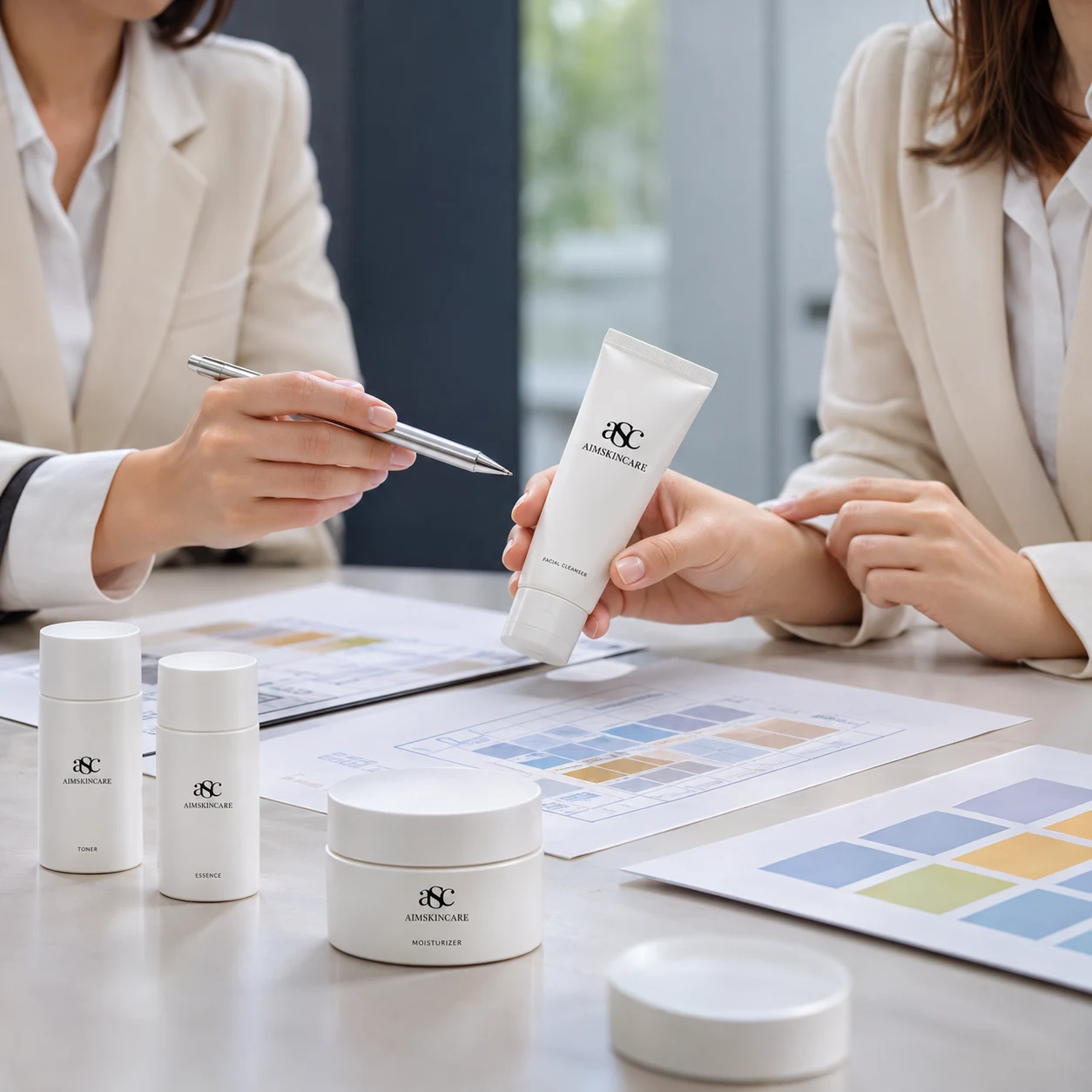
What should a brand prepare before an exfoliator consultation?
The skin concern (dullness, pores, texture, sensitivity), how strong the product should feel, whether you want a toner, pads, serum, or peeling gel, your position on alcohol and fragrance, a reference product, a selling price range, a rough quantity, and the claims you hope to print. From this we propose an acid pair and make samples.