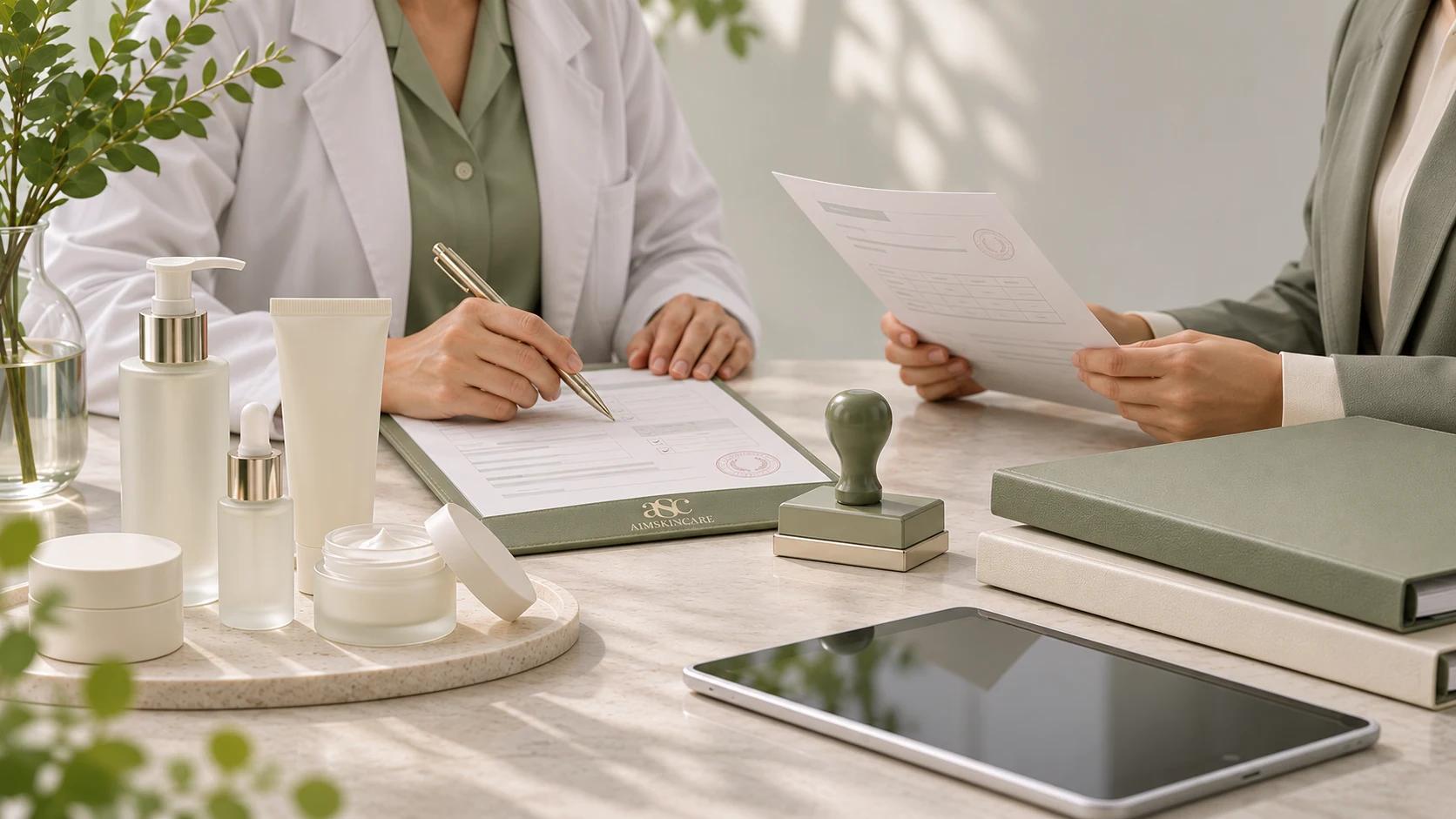
What is acne treatment contract manufacturing?
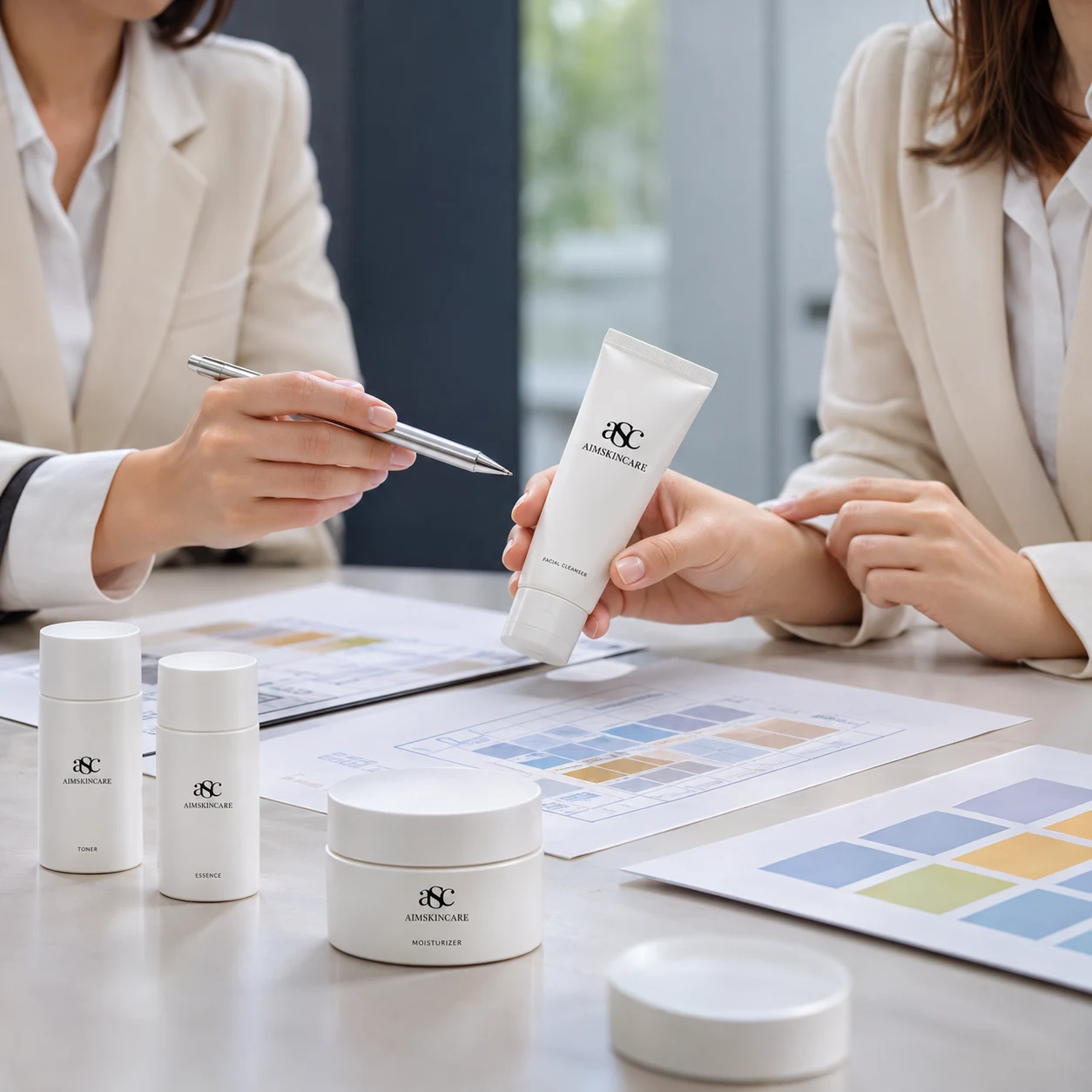
A cosmetics plant formulates and produces a leave-on gel, cream, or lotion for acne-prone skin under your brand: actives within cosmetic limits, stability and tolerance testing, claim substantiation, filling, and the BPOM notification. You decide who it is for and how it is sold.
What may an acne product claim in Indonesia?
Cosmetic claims only, under BPOM Regulation No. 3 of 2022: helps care for acne-prone skin, helps reduce the appearance of blemishes and redness, helps control excess oil, helps keep pores clear. "Treats acne", "cures acne", "removes acne", and "anti-bacterial" are therapeutic claims and are not allowed on a cosmetic. Each permitted claim needs supporting data.
What is the difference between an acne treatment and a spot treatment?
An acne treatment is applied over the whole face or the affected zone once or twice a day, at a level the skin tolerates everywhere. A spot treatment is dotted onto single blemishes, so it can be more concentrated or drying and is used in a tiny amount. Many brands sell them as a pair, the treatment for routine and the spot for emergencies.
What is the difference between an acne treatment and an anti-acne serum?
Mostly texture and positioning. A serum is thinner, usually in a dropper, and layered under moisturizer. An acne treatment is a gel or cream that often replaces the moisturizer for oily skin. The actives overlap, salicylic acid, niacinamide, zinc; the choice follows how your customer likes to use the product.
Which actives go into an acne treatment, and what does each do?
Salicylic acid, up to 2 percent in a leave-on, loosens the plug in the pore. Niacinamide works on oil and redness. Zinc PCA helps control sebum. Tea tree oil brings a purifying story and needs careful dosing for tolerance. Centella asiatica, allantoin, or panthenol calm the skin. Ingredients classed as medicines are outside cosmetics and we do not use them.
Which acne treatment formats can be made?
A clear gel for oily skin, the most common; a gel cream for combination skin that still wants some comfort; a light oil-free lotion for larger areas; and a night version with a higher load of soothing agents. All are leave-on, oil-free, usually fragrance-free, and designed to sit under sunscreen or makeup.
Why does pH matter for a salicylic acid treatment?
Salicylic acid works in its free form, which means a pH of roughly 3 to 4, and it dissolves poorly in water, so it needs a carrier such as propylene glycol or a glycol ether. Set the pH too high and it does little; too low and it stings. The pH is fixed in development and checked on every batch.
Can an acne treatment be non-comedogenic and oil-free?
Oil-free is a formulation fact: no oils or heavy esters in the base, which we can confirm from the formula. Non-comedogenic is a claim about the result on skin and needs a comedogenicity test on volunteers before it is printed. Most acne treatments are both, but only the first is true by design.
What tests do acne claims need?
"Helps reduce the appearance of blemishes" needs a clinical study with lesion counts or expert grading over several weeks. "Controls oil" needs a sebumeter reading. "Soothes redness" needs a clinical or instrumental redness evaluation. "Dermatologically tested" needs a patch test. The claim file is prepared with the BPOM notification.
Can an acne treatment be made for sensitive, acne-prone skin?
Yes. A lower salicylic acid level or a switch to PHA, niacinamide at a moderate percentage, zinc PCA, and a generous soothing system of centella, allantoin, or bisabolol, with no fragrance or ethanol. A patch test then supports "for sensitive skin". Reactive skin often does better with this gentler version used consistently than with a stronger one it stops using.
Can an acne treatment be made for teenagers?
Yes; acne-prone teenage skin is the biggest market for it. A gel with salicylic acid and niacinamide, oil-free and simple, is the usual brief. The label directions should say to start once a day, to pair it with sunscreen, and to stop if irritation persists. Products for children under three face separate rules; teenagers do not.
Which packaging suits an acne treatment?
A tube is the first choice: hygienic, protects the actives, and dispenses a pea-sized amount. An airless pump protects a formula with niacinamide and extracts from air and light for a premium line. A pump bottle suits a lighter lotion. Jars are avoided; fingers in an acne product are a hygiene risk.
What is the difference between OEM and ODM for an acne treatment?
ODM: our R&D team develops the gel from your brief, choosing the actives and their levels, the texture, and the claim set, and plans the tests behind each claim. OEM, or private label: you start from an acne care gel we already produce and change the extract, the scent, or the tube, with the tolerance data already in hand.
What should a brand prepare before an acne treatment consultation?
The age group and skin type you sell to, the claims you want to print, your preferred actives or ones to avoid, texture (gel, gel cream, lotion), whether it should be fragrance-free, a reference product, a selling price range, a rough quantity. We check the claims against the regulation first, then propose a formula and make samples.