What is rash cream contract manufacturing?
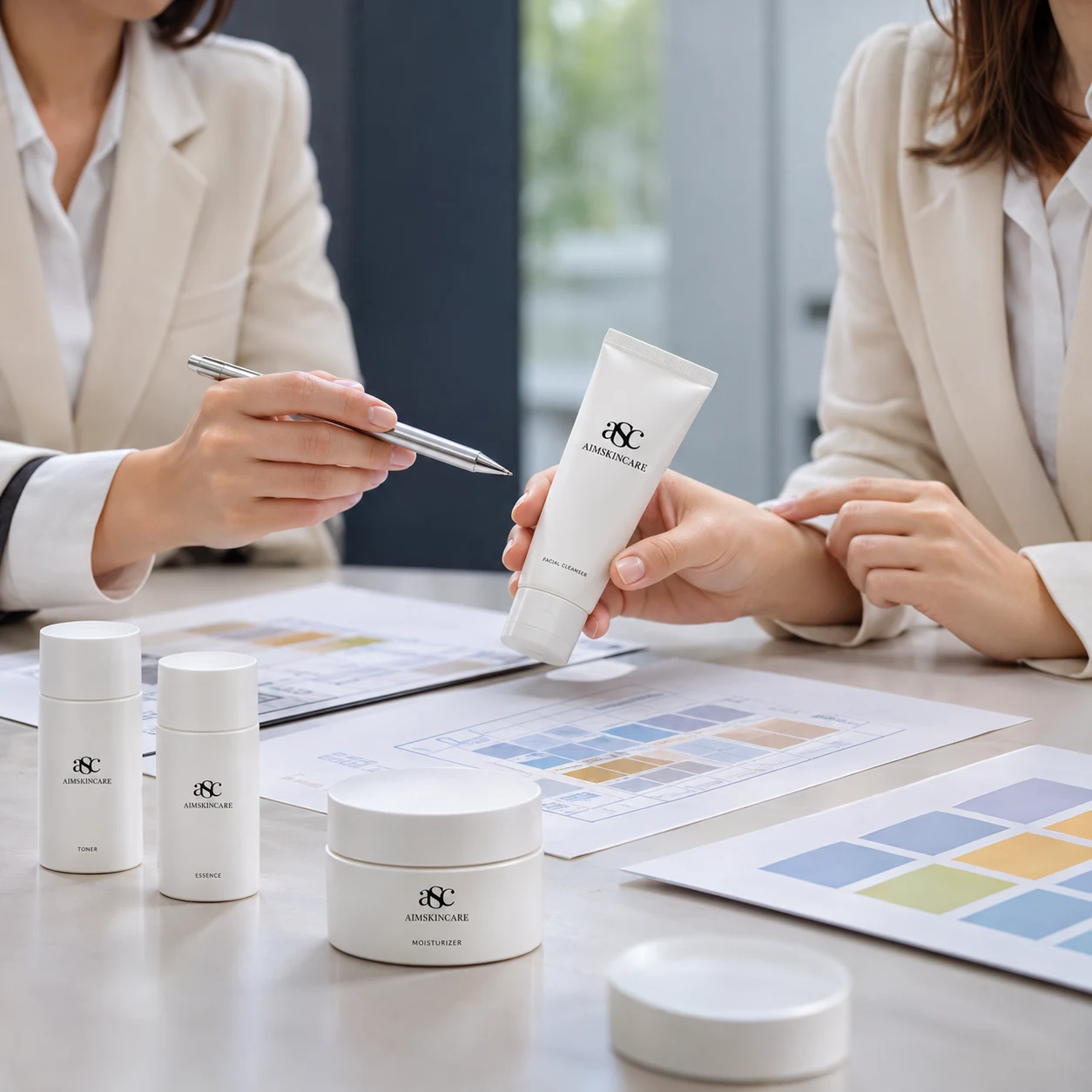
A cosmetics manufacturer develops and produces a protective cream for baby skin that reddens from diapers, moisture, or friction, and you sell it under your own brand. AIMSKINCARE handles the formula, stability and safety tests, packaging, and the BPOM notification, while you set the positioning, price, and sales channels.
What is the difference between a rash cream and a diaper rash cream?
A diaper rash cream is made for one place, the skin under the diaper, and is often a thick white paste. A rash cream covers more ground, from the diaper area to the folds of the neck and thighs and spots where clothing rubs, so it is usually lighter and less white. Many brands sell one formula under both names on the label.
How does zinc oxide work in a rash cream?
Zinc oxide is an insoluble mineral powder. Spread on the skin, it leaves a thin layer that helps keep wetness from urine, stool, or sweat off the skin and reduces rubbing. Ingredients such as dimethicone, lanolin, or petrolatum help that layer stay in place in a damp fold or under a diaper.
Which areas can a rash cream label name?
Usually the diaper area, the folds of the neck, armpits, and thighs, and skin that rubs against clothing. Every area the label names is part of the claim, so the safety assessment and any in-use test must cover it. A rash cream is not meant for the face or around the eyes unless it has been assessed for that.
Which ingredients usually go alongside zinc oxide?
Panthenol and allantoin to help condition the skin, lanolin or shea butter for softness, dimethicone or petrolatum for the protective film, and sometimes calendula or chamomile extract. We keep the list short, because the cream sits on covered, damp skin and every extra ingredient is one more chance of irritation.
What claims can a rash cream make?
Cosmetic ones, such as "helps protect skin from wetness and friction" or "helps calm the look of redness". "Treats" or "heals a rash" is a therapeutic claim and is not allowed on a cosmetic. The rule is BPOM Regulation No. 3 of 2022 on cosmetic claims, and every claim still needs supporting data.
How do you keep a rash cream from feeling heavy in hot weather?
By choosing an oil-in-water cream over a greasy ointment, keeping petrolatum low, and letting dimethicone carry part of the barrier. The cream then spreads thin in a neck fold and does not trap heat. Thicker, more occlusive versions are kept for the diaper area at night, where staying power matters more than feel.
Why does some zinc oxide cream feel gritty?
Because the zinc oxide particles have clumped instead of dispersing evenly. Small clumps feel rough on the skin and make the cream hard to spread. We disperse the zinc oxide fully in the oil phase before emulsifying, and check texture on every batch. Stability tests at high temperature confirm the powder does not settle or separate in storage.
What is the difference between a rash cream and a soothing baby cream?
A rash cream is a targeted barrier. It goes on the spots that meet wetness or friction and leaves a zinc layer there. A soothing baby cream is an everyday moisturizer for dry or sensitive skin all over the body, with calming ingredients such as oat or panthenol and no barrier film. Most baby lines carry both.
Why does a rash cream need its own safety assessment?
It is used on children under three, on skin that stays covered by a diaper or closed in a fold, so exposure is higher than for a cream on open skin. Products for children under three face stricter ingredient restrictions and need a safety assessment. The zinc oxide itself is cosmetic grade, because heavy metal impurities such as lead are restricted.
Should a rash cream be fragrance-free?
Most brands go fragrance-free, and we recommend it. The skin it goes on is warm, damp, and often already red, so fragrance adds irritation risk for little benefit. The base scent of lanolin or zinc is usually faint. If a brand still wants a scent, it is kept low and fragrance allergens are declared as the labeling rules require.
Which tests support "dermatologically tested" or "hypoallergenic"?
Both need a dermatologist-supervised patch test on the finished formula. A claim such as "helps protect skin from friction" can be supported by an in-use test with a parent questionnaire. Every formula also goes through stability and microbiological testing before notification, especially a cream that contains water.
Is a tube or a jar better for a rash cream?
A tube is more hygienic because fingers never touch the product, and it suits a soft cream that parents carry in the diaper bag. A jar is easier for a thick paste and is often chosen for large sizes. A water-based cream in a jar needs a preservative system that holds up against contamination from fingers.
What should I bring to the first rash cream consultation?
The areas you want the label to name, the texture you have in mind, how white it may look on skin, whether it is for daily use or for the night, the claims you hope to print, and a rough quantity. A reference product from the market helps the AIMSKINCARE R&D team read your brief faster.