What is micellar water contract manufacturing?
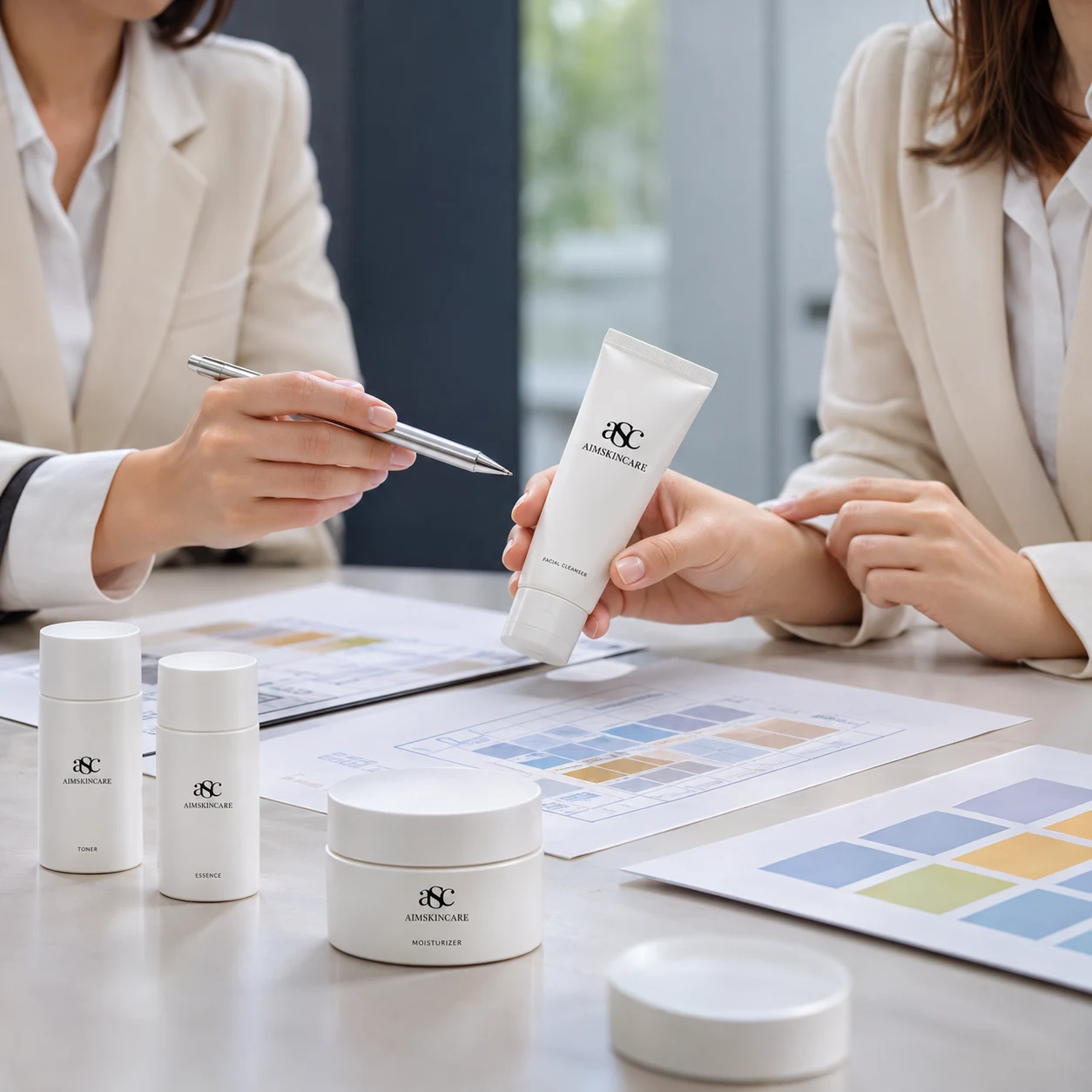
A cosmetics plant develops and produces a micellar cleansing water for your brand: surfactant system, preservation, tolerance testing, filling, and the BPOM notification. The product carries your name and your positioning; the plant carries the formulation and the paperwork.
How does micellar water clean without rinsing?
A low level of mild surfactant forms micelles in the water. Swept over the face on a cotton pad, the oil-loving cores of those micelles bind makeup, sunscreen, and sebum, which leave with the pad. Because the surfactant is gentle and the amount small, the trace left on the skin can stay, which is what allows the no-rinse label.
What is the difference between micellar water and a makeup remover?
Micellar water is a single clear water phase for everyday and light makeup, and can be left on. A dedicated makeup remover is usually biphasic, an oil layer over a water layer that is shaken together, built to dissolve waterproof mascara and long-wear lipstick, and often followed by a wash. Many brands sell both as a pair.
Is micellar water the same as a toner?
No. Micellar water contains surfactant and is used first, to take dirt off. A toner contains no cleansing surfactant and is used after cleansing, to hydrate or prepare the skin. A micellar water used as a toner leaves surfactant on the face; a toner used as a cleanser removes very little.
Which surfactants are used in micellar water, and what does each decide?
Poloxamer 184 or 188 is the classic choice: very mild, non-stinging, and the reason the no-rinse claim is credible. PEG-6 caprylic/capric glycerides adds makeup-dissolving power while staying gentle. Decyl or coco-glucoside raises cleansing strength for heavier makeup but moves the product toward a rinse-off feel. The blend sets both performance and tolerance.
Can micellar water remove waterproof makeup?
A standard micellar water handles light to medium makeup and daily sunscreen. For waterproof mascara or long-wear foundation, we either raise the glucoside level, which reduces the leave-on comfort, or make an oil-infused biphasic micellar water. The brief should say which makeup load the customer actually wears.
Can micellar water be used around the eyes?
It is the main reason people buy it, so we formulate for it: a near-neutral pH, surfactants chosen for low eye irritation, and no fragrance. A product intended for the eye area meets stricter microbiological requirements, and an "ophthalmologically tested" claim needs its own tolerance test on volunteers.
How is a water-based product like micellar water preserved?
A product that is 95 percent water is a comfortable place for microbes, so the preservative system matters more than in a cream. We use preservatives from the permitted list under BPOM Regulation No. 23 of 2019 as amended, commonly phenoxyethanol with ethylhexylglycerin or sodium benzoate at a suitable pH, and confirm the system with a preservative challenge test.
Which micellar water variants can be made?
A plain hydrating version with glycerin and panthenol; an oil control version with niacinamide or zinc PCA; a soothing version with centella asiatica or rose water for sensitive skin; a brightening version with a vitamin C derivative; a biphasic oil-infused version for heavy makeup; and a micellar mist or gel for a different format on the shelf.
Which claims need testing on micellar water?
"No rinse" and "no stinging" are tolerance claims and need a use test on volunteers. "Removes makeup in one sweep" needs a makeup removal test. "Hypoallergenic" and "suitable for sensitive skin" need a patch test. Claims are written to BPOM Regulation No. 3 of 2022, so "cleanses" and "refreshes" are fine, and anything therapeutic is not.
Can micellar water be made alcohol-free and fragrance-free?
Yes, and most are. Micellar water needs no ethanol to work; the surfactant does the cleaning. Fragrance is the first thing we leave out for a sensitive-skin or eye-area positioning, because it is the most likely cause of stinging. A light scent can still be added for a mainstream version with a solubilizer.
What labelling rules apply to micellar water?
The label follows BPOM Regulation No. 18 of 2024: product name, full ingredient list in INCI order, directions, warnings, batch number, expiry, and the BPOM notification number. For a no-rinse product the directions should say how to apply it and whether to avoid the eye contour, and any claim on the front has to be one the data supports.
Which packaging suits micellar water?
A flip-top bottle is the standard: it pours onto a cotton pad without waste and is economical in 100 to 400 ml sizes. A pump bottle gives a cleaner dose for a premium line. A mist pump turns the formula into a micellar mist. Biphasic versions need headspace in the bottle so they can be shaken.
OEM or ODM: which route suits a micellar water launch?
ODM, where our R&D team develops the formula from your brief, suits a brand with a specific surfactant, active, or texture in mind. OEM, or private label, where you start from a micellar base we already make and change scent, active, or bottle, suits a faster first launch. Both end in the same BPOM notification.
What should a brand prepare before a micellar water consultation?
Who will use it and how much makeup they wear, whether it must suit the eye area, your position on fragrance, the active you want if any, a reference product you like, a selling price range, a rough first quantity, and the claims you want on the front. From this we propose a surfactant system and make samples.