Welcoming a New Chapter for the Beauty Industry: Mandatory Halal Cosmetics from 17 October 2026
Indonesia's beauty industry is on the verge of a major transformation.
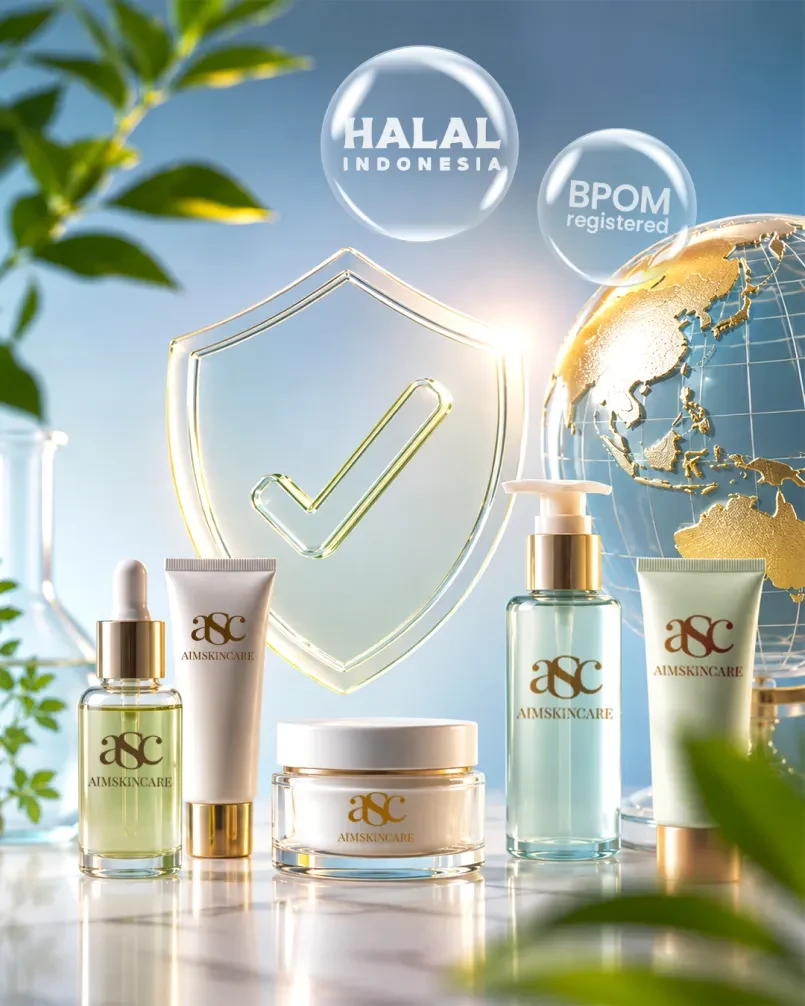
Indonesia's beauty industry is on the verge of a major transformation. Ahead of the mandatory halal certification for cosmetic products on 17 October 2026, the competitive landscape and operating standards of cosmetics businesses are certain to change significantly.
This policy is not merely about legal compliance; it is a shared commitment to providing assurance of safety, quality, and peace of mind for all consumers. Halal certification has now shifted from a market preference to a binding legal obligation that protects consumer rights and drives national economic growth.
Legal Basis and Deadline
The main foundation of this policy is set out in Government Regulation (PP) No. 42 of 2024, which mandates that all cosmetic products that enter, circulate, and are traded in Indonesia must hold a halal certificate no later than 17 October 2026.
This regulation complements the legal framework already in place, including:
Law No. 33 of 2014 on Halal Product Assurance (JPH Law): The primary foundation of the national halal certification obligation.
Law No. 6 of 2023 (Job Creation Law): Provides certainty on the validity period of halal certificates.
PMA No. 20 of 2021: Governs the special certification scheme for Micro and Small Businesses (UMK).
In implementation, the division of roles between agencies is crucial. The National Agency of Drug and Food Control (BPOM) oversees safety, efficacy, and quality (such as the CPKB standard), while the Halal Product Assurance Organizing Agency (BPJPH) has full authority to determine a product's halal status.
The Strategic Role and Authority of BPJPH
As a Non-Ministerial Government Agency reporting directly to the President, BPJPH acts as the main authority in organizing JPH. Under Law No. 33 of 2014, BPJPH holds broad authority, from formulating policy, setting standards and criteria, and registering foreign products, to accrediting Halal Inspection Agencies (LPH) and issuing or revoking halal certificates and labels.
In carrying out its duties, BPJPH works together with LPH, the Indonesian Ulema Council (MUI), Halal Product Process Assistance Institutions (LP3H), and relevant ministries and agencies.
Benefits, Challenges, and Government Interventions
The halal mandate has a dual impact that benefits both consumers and producers:
For Consumers: Provides peace of mind about the ingredients contained, ensures hygiene and health quality, and ensures religious requirements are fulfilled.
For Businesses: Increases consumer trust and loyalty, expands access to domestic and global markets, increases brand value, and provides legal certainty.
Even so, challenges on the ground such as limited capital, low halal literacy, and technical registration obstacles are still faced by some businesses, especially at the UMK scale.
To address these challenges, the government has stepped in with a series of strategic solutions:
Free Halal Certification Program (SEHATI) and fee subsidies through the APBN/APBD budgets.
UMK Assistance provided intensively by Halal Product Process (PPH) Facilitators.
System Digitalization with user-friendly registration through the SIHALAL platform (https://ptsp.halal.go.id/).
Procedure Simplification and the establishment of Halal Centers at various universities.
Law Enforcement and Non-Halal Label Provisions
Entering 2026, the government is tightening enforcement to build a culture of compliance across the entire halal ecosystem.
1. Administrative Sanctions (BPJPH Regulation No. 2 of 2026)
Promulgated on 5 June 2026, this regulation provides comprehensive guidelines on the procedures for imposing administrative sanctions on parties that violate JPH provisions. That said, sanctions are not the main goal, but a means of encouraging all parties—from producers to auditors—to carry out their obligations accountably.
2. Non-Halal Label Rules (BPJPH Regulation No. 3 of 2026)
Issued on 13 July 2026, this regulation requires products that do not meet halal criteria to display a clear marker:
Standard Statement: Must display the text "MENGANDUNG BABI" (if containing pork/derivatives) or "NON HALAL" (for other prohibited ingredients or processes that do not meet standards).
Label Position: Must be placed on the part of the packaging that is easiest to see and read, and must be permanent.
Transition Period: Businesses are given up to 12 months from the regulation's promulgation to adjust their packaging.
Registration Flow and Mechanism
Under Law No. 6 of 2023, a halal certificate issued by BPJPH remains valid indefinitely as long as there is no change in ingredient composition or Halal Product Process (PPH).
Businesses can choose between two registration pathways through the SIHALAL portal:
Self Declare Pathway: For UMK only, with low-risk products and ingredients already confirmed as halal, through PPH facilitation and determination by the Fatwa Committee.
Regular Pathway: Through testing by an LPH, an MUI fatwa session, and issuance of the certificate by BPJPH. Regular fees are fairly transparent and can be calculated independently using the fee calculator on the official BPJPH website (bpjph.halal.go.id/kalkulator-biaya-sh/).
Conclusion
The 17 October 2026 deadline is no longer just talk but a legal reality that the beauty industry must respond to promptly. By preparing early—whether through the regular pathway or the self declare facility—businesses not only keep themselves clear of administrative sanctions but also open up a golden opportunity to capture the fast-growing global halal cosmetics market.