Toward Mandatory Halal Certification for Cosmetics in October 2026
Halal certification is no longer just a preference of Muslim consumers; it has become a binding legal obligation for businesses in Indonesia.
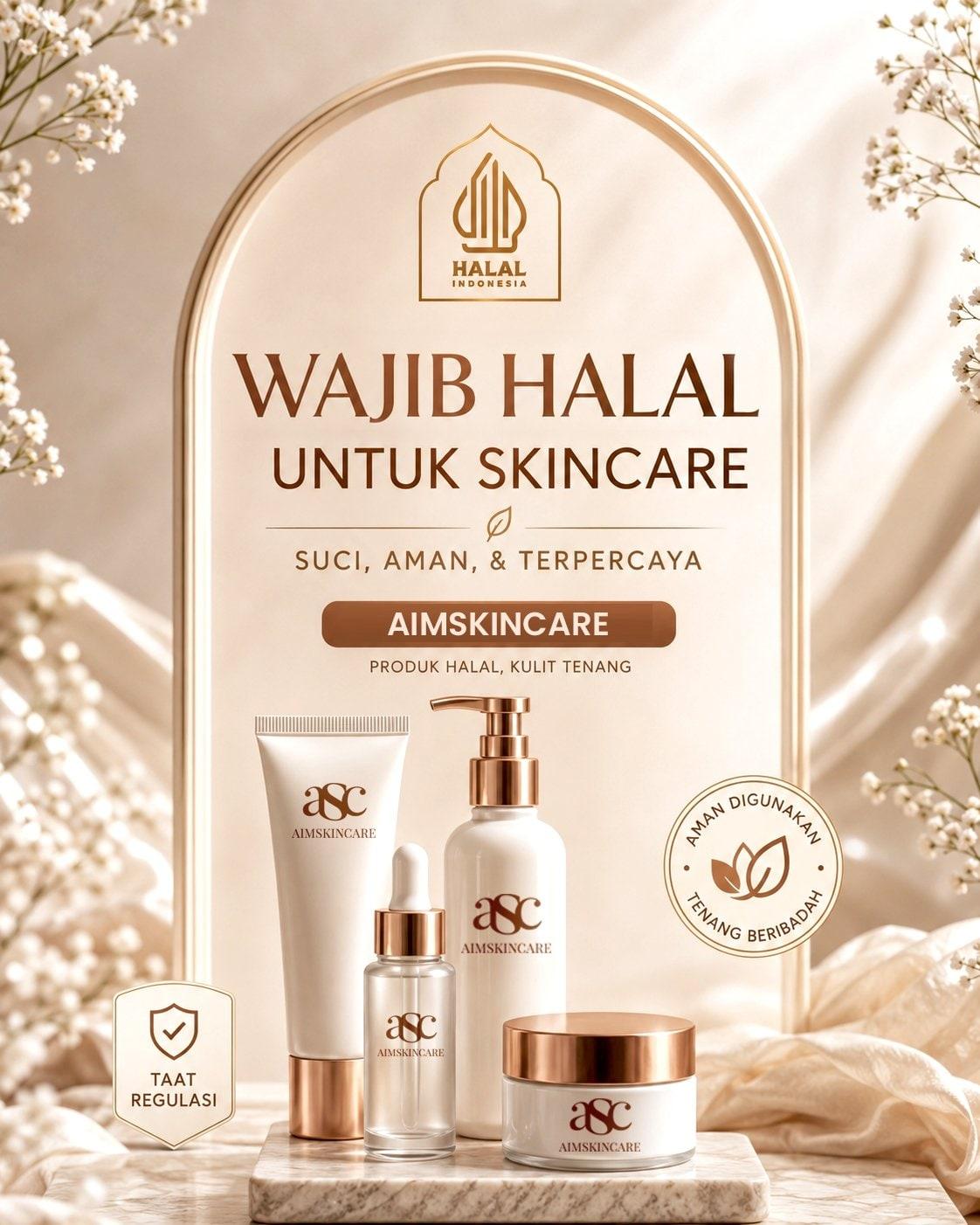
Mandatory Halal Certification for Cosmetics from October 2026: Rules, Challenges, and Solutions
Halal certification is no longer just a preference of Muslim consumers; it has become a binding legal obligation for businesses in Indonesia. This policy is in line with the state's commitment to guaranteeing consumers' right to products that comply with the principles of Islamic law, while encouraging the growth of the national halal industry. Under Government Regulation No. 42 of 2024, starting 17 October 2026, all cosmetic products that enter, circulate, and are traded in Indonesia must hold a halal certificate from the Halal Product Assurance Organizing Agency (BPJPH).
Profile and Authority of BPJPH
BPJPH is a Non-Ministerial Government Agency that reports directly to the President and is tasked with organizing Halal Product Assurance (JPH) under Law No. 33 of 2014. In carrying out its duties, BPJPH works with LPH, MUI, LP3H, relevant ministries and agencies, and the public.
Under Law No. 33 of 2014, BPJPH's authority includes:
- Formulating and establishing JPH policy.
- Establishing JPH norms, standards, procedures, and criteria.
- Issuing and revoking Halal Certificates and Halal Labels on products.
- Registering Halal Certificates for foreign products.
- Conducting outreach, education, and publication on Halal Products.
- Accrediting LPH.
- Registering Halal Auditors.
- Supervising JPH.
- Conducting Halal Auditor training.
- Cooperating with domestic and foreign institutions on JPH implementation.
Legal Basis for the Halal Obligation
The halal mandate in Indonesia rests on several key regulations:
- Law No. 33 of 2014: Governs Halal Product Assurance (the JPH Law), which requires products in circulation to be halal certified.
- Government Regulation No. 42 of 2024: Sets the halal obligation deadline for goods in the cosmetics category at no later than 17 October 2026.
- Minister of Religious Affairs Regulation No. 20 of 2021: Governs halal certification for micro and small businesses (UMK).
- BPOM and BPJPH synergy: BPOM oversees safety and quality aspects (such as the CPKB standard), while BPJPH determines halal status.
Benefits of Halal Certification
Halal certification delivers optimal advantages for both businesses and consumers:
- Increases buyers' trust and loyalty toward the product.
- Expands access to domestic and global markets.
- Increases product added value and branding.
- Provides legal certainty and easier licensing.
- Gives peace of mind about the ingredients in the product.
- Ensures optimal hygiene and health quality.
- Fulfils religious requirements properly and with confidence.
Implementation Challenges and Solutions
Challenges for Businesses
- Certification costs and limited capital.
- Limited knowledge and halal literacy.
- A process regarded as technically complicated.
Government Solutions
- Free halal certification programs.
- UMK assistance from official organizations such as BPJPH Halal Facilitators.
- Certification fee subsidies through the APBN and APBD budgets.
- Halal training and workshops by BPJPH, the Ministry of Religious Affairs, and regional agencies.
- Halal Center programs at universities.
- Digital halal certification guidance through the SIHALAL application.
- Procedure simplification through BPJPH Regulation No. 20/2021.
- Involvement of community-based Halal Product Process (PPH) Facilitators.
- Digitalization of the registration process.
Administrative Sanctions and Law Enforcement
BPJPH has issued BPJPH Regulation No. 2 of 2026 on the Imposition of Administrative Sanctions for Violations in the Implementation of Halal Product Assurance. Promulgated by the Ministry of Law on 5 June 2026, this regulation serves as the guideline for administrative law enforcement to strengthen legal certainty, accountability, and public protection.
The application of administrative sanctions aims to build a culture of compliance among all parties—from businesses, Halal Inspection Agencies (LPH), Halal Auditors, and PPH Facilitation Institutions to PPH Facilitators—so that public trust in Indonesian halal products grows stronger. This regulation follows up on Law No. 33 of 2014 in conjunction with Government Regulation No. 42 of 2024, and governs authority, types of sanctions, sanction procedures, objection mechanisms, and follow-up supervision.
Halal Certificate Provisions and Registration Pathways
- Definition: A Halal Certificate is the recognition of a product's halal status issued by BPJPH based on a written Halal Fatwa from MUI.
- Validity: Under the Job Creation Law No. 6 of 2023, a Halal Certificate is valid from the time it is issued by BPJPH and remains valid as long as there is no change in ingredient composition and/or PPH.
- Registration: Applications are submitted online through the SIHALAL application at https://ptsp.halal.go.id/.
- Registration Schemes:
- Self Declare (UMK only): Through PPH facilitation, determination by the Fatwa Committee, and issuance by BPJPH.
- Regular: Through LPH examination, an MUI fatwa session, and issuance by BPJPH.
- Regular Fees: Comprising registration & issuance of the SH, the fatwa session determination, and LPH examination. Estimates can be calculated with the official fee calculator: bpjph.halal.go.id/kalkulator-biaya-sh/.
- New Logo: The use of the new halal logo and label is governed by Cabinet Decision No. 145 of 2022 and Cabinet Decision No. 88 of 2023.
Strict Rules on Non-Halal Labelling
BPJPH Regulation No. 3 of 2026 (issued 13 July 2026) governs the Form and Procedures for Displaying Non-Halal Statements. This rule requires non-halal products—including cosmetics with non-halal ingredients—to display a clear statement.
Non-Halal Label Provisions:
- Text Categories: Using the standard text "MENGANDUNG BABI" (contains pork; specifically for pork ingredients/derivatives) or "NON HALAL" (for prohibited ingredients other than pork or processes that do not meet the SJPH).
- Label Position and Nature: Must be placed on the part of the packaging that is easiest to see and read, and must be permanent (not easily erased, peeled off, or damaged).
- Adjustment Period: Businesses are given a label adjustment transition period of up to 12 months from when the regulation took effect in July 2026.